
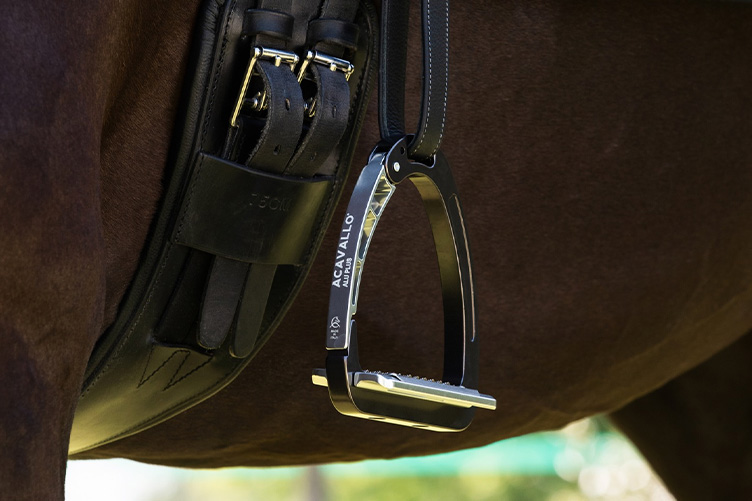
For generations, peacock stirrups were a staple in many equestrian barns, particularly for beginner riders and children. Their distinctive design, featuring an elastic band on one side, was intended to offer a crucial safety feature: the ability for a rider’s foot to release easily in the event of a fall, preventing the terrifying scenario of being dragged. However, as our understanding of rider safety evolves and new technologies emerge, the equestrian world has re-evaluated the efficacy and, more critically, the inherent dangers of these seemingly benign stirrups.
Today, major equestrian organizations like the United States Pony Clubs (USPC) and the United States Equestrian Federation (USEF) have banned peacock stirrups from their recognized competitions. This decisive action stems from a growing body of evidence and firsthand accounts of serious injuries, proving that what was once considered a safety feature has, in some critical ways, become a hazard.
The Hidden Danger of Peacock Stirrups: Why the Ban?
While the core idea behind peacock stirrups – a quick-release mechanism – was sound, their specific design proved problematic. The primary issue lies with the metal “hook and nub” design, where the rubber band and leather tab attach to the stirrup iron.

Here’s why they’ve been deemed unsafe:
- Dismounting Hazards: The most significant and frequently reported injuries occur not during a fall, but during a routine dismount or a partial fall where the rider slides down the side of the horse. The upward-pointing metal hook can snag on clothing, such as belts, belt loops, or even the increasingly popular stretchy athletic fabrics used in riding apparel. When this happens, it can cause clothing to rip and, far more alarmingly, lead to severe lacerations to the rider’s skin, including the abdomen, groin, and even genitals. These injuries can be serious, often requiring surgery and potentially resulting in permanent damage.
- False Sense of Security: For many years, riders and instructors believed peacock stirrups offered superior safety. This could, inadvertently, lead to a false sense of security, potentially causing riders to be less diligent about proper foot placement or less prepared for an emergency dismount.
- Limited Weight Capacity: Peacock stirrups often have a lower weight limit compared to other stirrups, making them unsuitable for many adult riders. If the rider exceeds this limit, the band may not release as intended, or the stirrup could fail in other ways.
- Unintended Release While Riding: While rare with properly maintained stirrups, an old or stretched rubber band could potentially pop off during normal riding, leading to a sudden loss of stirrup and an unexpected dismount or fall.
- Potential for Horse Injury: In the event of a fall where the rider safely detaches but the stirrup remains attached to the saddle with the band popped off, the exposed metal hook could potentially injure the horse if it swings against their side during a panicked run.
The bans by USPC (effective January 1, 2025) and USEF (effective December 1, 2025) are a direct response to these documented dangers, prioritizing rider safety based on real-world incident reports.
Moving Forward: Modern Safety Stirrup Alternatives
The good news for equestrians is that the market has evolved significantly, offering a wide array of innovative safety stirrups that address the shortcomings of the peacock design while providing superior safety features, comfort, and performance. When choosing an alternative, consider your riding discipline, personal preference, budget, and any specific needs (like knee comfort or extra grip).
Here are some popular and effective alternatives to peacock stirrups:

- Breakaway/Open-Sided Stirrups: These are perhaps the most common and effective modern safety stirrups. They feature an outer arm that is designed to release, open, or detach when sufficient pressure is applied during a fall. Once the foot is clear, a spring mechanism typically brings the arm back into place.
- Examples: Acavallo Arena Aluplus 2.0 Stirrups, Tech Stirrups Venice Sloped EVO Stirrups, Royal Rider Concept Safety Stirrups
- Pros: Highly effective at releasing the foot, generally well-designed for comfort and grip, and often approved for competition across various disciplines.
- Cons: Can be significantly more expensive than traditional stirrups.
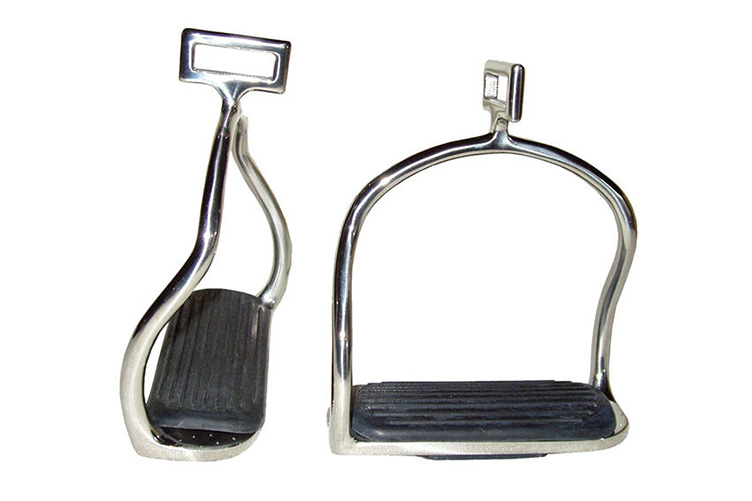
- Bent-Leg/Offset Stirrups: These stirrups feature a distinctive, often outwardly curved design that makes it more difficult for the foot to get trapped. While they don’t have a specific “breakaway” mechanism, the shape aids in easier foot release during a fall compared to traditional Fillis irons.
- Examples: Coronet Double Safety Stirrup Irons with Cross Loop, Intrepid International Foot-Free Safety Stirrup Irons with Pads
- Pros: Offer a degree of safety without complex moving parts, often provide good balance and comfort, and can be a more budget-friendly safety option.
- Cons: May not offer the same “guaranteed” release as true breakaway designs in all fall scenarios.
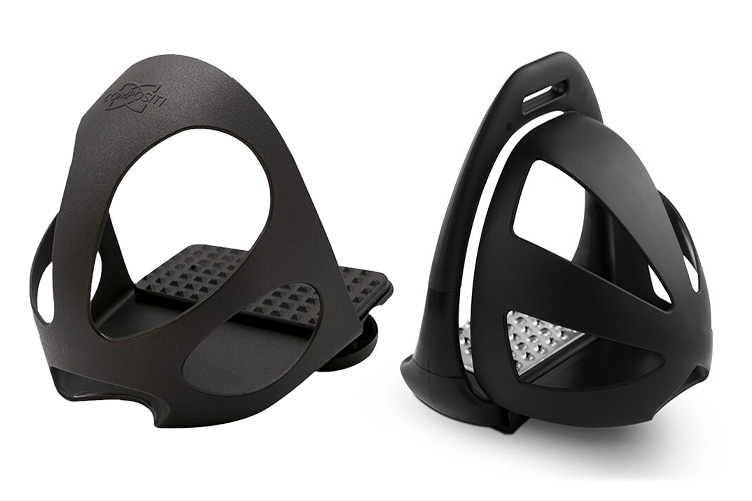
- Toe Cages/Hooded Stirrups: Primarily seen in Western riding or endurance riding, these stirrups feature a cage or hood over the front of the stirrup, physically preventing the foot from sliding all the way through and getting caught.
- Examples: Compositi MATRIX Safety Toe Cages, Royal Rider Sport Flex Endurance Stirrups
- Pros: Very effective at preventing the foot from getting stuck.
- Cons: Less common in English disciplines and can be bulky.
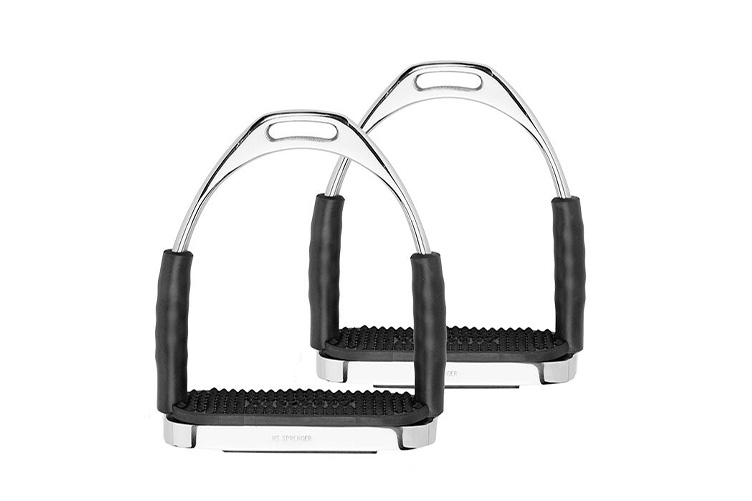
- Flexible Joint Stirrups: These stirrups have a flexible joint in the branches that allows the stirrup to bend and twist. While not a “breakaway” in the same sense as open-sided stirrups, their flexibility can help facilitate foot release during a fall.
- Examples: Herm Sprenger System-4 Stirrups, Tekna Flex-Tek Stirrups, Coronet Fillis Double Jointed Stirrup Irons
- Pros: Can offer some shock absorption and comfort, and contribute to easier foot release.
- Cons: May not fully release the foot in all fall scenarios compared to dedicated breakaway designs.
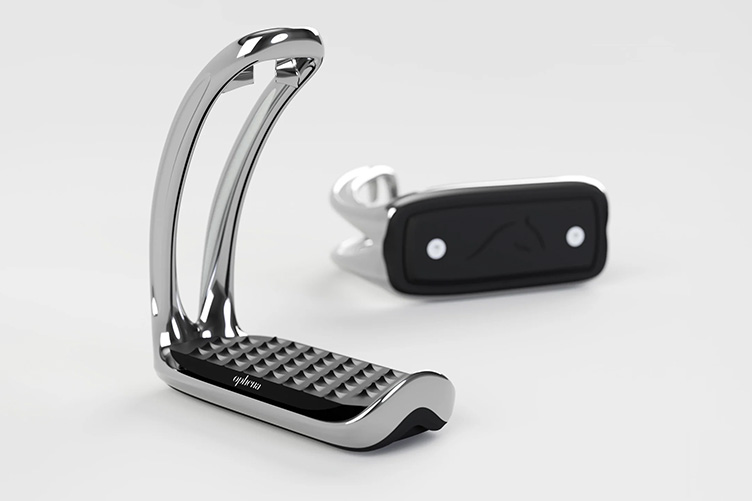
- Magnetic Safety Stirrups: A newer innovation, these stirrups combine an open-sided design with a magnetic connection to a special sole insert in your boot. The magnetic attraction helps keep your foot perfectly positioned while riding, but releases instantly in the event of a fall.
- Examples: Ophena S Pro
- Pros: Excellent foot positioning and security, very quick release in a fall, and often have a sleek, modern design.
- Cons: Require specific magnetic insoles for your boots, and are typically at the higher end of the price spectrum.
Making an Informed Choice
The shift away from peacock stirrups represents a positive advancement in equestrian safety. While they were a well-intentioned solution, their inherent design flaws ultimately created new risks. Today’s market offers a fantastic range of safety stirrups that not only perform their primary safety function more effectively but also often enhance comfort and riding performance.
When it’s time to upgrade your stirrups, speak with experienced professionals at your local tack shop (like The Cheshire Horse!), consult your trainer, and research the options available. Investing in modern safety stirrups is an investment in your well-being and peace of mind every time you swing into the saddle. Your safety, and that of your horse, is paramount.

Jennifer Keating is an equestrian and the e-commerce copywriter for The Cheshire Horse. She’s been competing on the hunter/jumper and Arabian circuits for years and has earned nearly 20 national championship titles along the way. She’s still actively showing while also writing about the products and gear she knows from real experience in the barn and the ring.